Move from AI experiments to one workflow that works.
DigitalCoa.ch helps Swiss service SMEs, experts and small teams turn one real workflow into a useful, testable and reusable AI-supported result, with human judgment clearly defined.
EXECUTION TYPE
Tested Operational Flow
The tools are available. The work has not changed.
AI tools have been tested, but nothing became a shared workflow.
Experiments produced outputs or demos, but no reusable operational result.
Useful knowledge is trapped in documents, notes and individual habits.
Nobody is fully clear about what AI can support, what must be reviewed and who remains accountable.
The problem is rarely access to AI. The problem is turning one real signal into a working method without losing judgment or control.
AI Workflow Sprint
Bring one real workflow. Leave with a tested AI-supported version and clear evidence of what changed.
- 2–4 weeks duration
- 4–6 working sessions
- One focused workflow
- Human review points explicit
- workflow map
- current-state friction analysis
- AI-support opportunities
- prompts, rules or templates
- human review and escalation points
- tested workflow version
- evidence and next-step brief
Scope note: This is a focused working sprint, not a full transformation programme.
For experts and small teams: build one useful asset
Some buyers do not need a full workflow sprint. They need one concrete asset built from their expertise, documents, recurring questions or market signals.
AI Second Brain Co-Build
Make expertise, notes, documents, and recurring questions easier to retrieve and reuse.
Team AI Working Method
Turn scattered AI usage into shared workflows, prompts, routines, and review points.
Lead Magnet Generator
Turn public data, expertise, and repeated client questions into a reusable acquisition asset.
Content Marketing Engine
Turn expertise, proof, questions, and market signals into a repeatable content workflow.
The method has been tested under real constraints.
We validate workflows through intensive training and live service pilot testing to prove capability before scaling.
A 4-day intensive format where 33 teams of non-technical participants built and validated visible functional prototypes.
A service business wanted to move beyond occasional ChatGPT use. Two pilot paths were proposed. The client selected a concrete lead magnet generator because it produced a visible, reusable business asset.
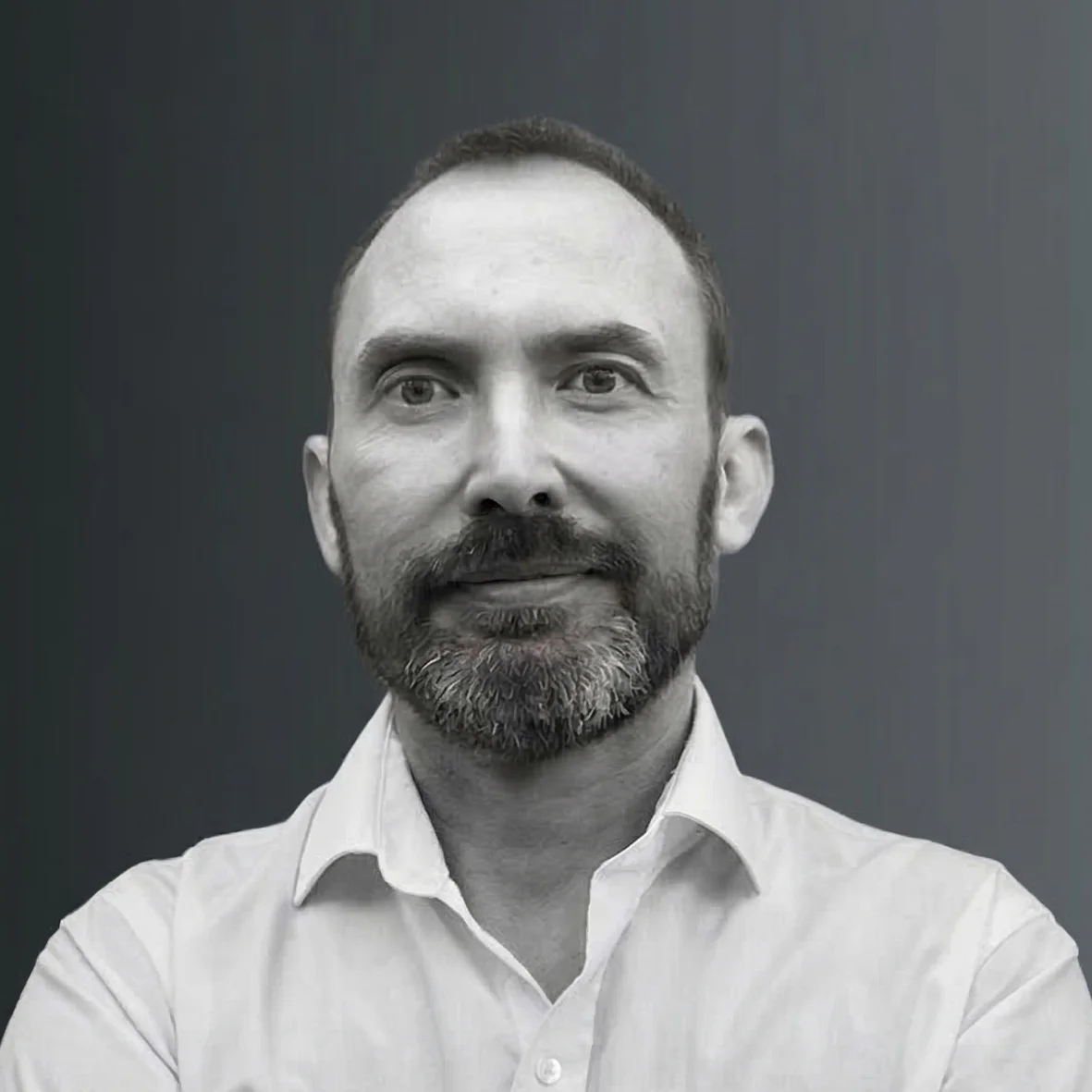
The first conversation stays human.
I work directly with clients to identify the real signal, define where AI can help, and keep judgment, review and accountability visible. My background combines digital marketing, technology, operations, teaching and hands-on AI system building.
From a real problem to visible evidence.
Find the real problem
Identify the workflow, repeated question, friction or opportunity worth addressing.
Build one working asset
Turn expertise, logic and judgment into a usable workflow, tool, template or system.
Prove what changed
Test the output, gather feedback and decide what deserves to scale.
What comes after the first working result
Signal-to-System Transformation
Turn multiple workflows, assets and experiments into structured capability.
Executive Decision Architecture
Clarify decision rights, escalation, accountability and control as AI changes how work gets done.
"Prediction is abundant. Judgment is the advantage."
Start with one workflow that matters.
Bring the repeated work, client question, decision or bottleneck you want to make clearer.